↓Skip to main content
Profile Photo

Kuo Yang

PhD | Research Assistant

About

I am a PhD student and Research Assistant in Computer Engineering at Northeastern University, advised by Prof. Yun Raymond Fu at SmileLab. My research focuses on multimodal representation alignment, visual reasoning in multimodal large language models, and evidence-grounded LLM evaluation. My recent work also explores efficient speech models and uncertainty-aware decision-making.

I maintain Awesome Tiny Recursive Models, a curated resource on recursive reasoning models, their benchmarks, and evaluation protocols.

Recent

Last updated:

Journey

2026

Research at Wyze

Kirkland, WA
Wyze Inc.
May 2026 - Present
  • Co-authored AMRD, a framework for lightweight speech emotion recognition that combines adaptive multi-teacher weighting with relational knowledge distillation.
  • Studied efficient on-device emotion recognition, transferring knowledge from large speech models to compact student networks.
Research Paper Visit Website
2025

Research Scientist Intern

Cambridge, MA
Sanofi
May 2025 - Apr 2026
  • Conducted research on tabular data understanding and question answering (QA) with LLMs using multi-agent chain-of-thought (CoT), focusing on improving reasoning and accuracy and reducing token usage over structured datasets.
  • Integrated Weave and W&B functions into the CTD project for experiment tracking and data logging, enhancing reproducibility and collaboration in structuring regulatory submissions (clinical, preclinical, and quality data).
  • Contributed to CI/CD workflows by developing automated tests and writing Lambda test code to validate code quality and ensure reliability of new commitments.
Visit Website
2024

PhD in Computer Engineering

Boston, MA
Northeastern University
Sep 2024 - Present
  • Teaching Assistant: Analysis of Random Phenomena in Electrical and Computer Engineering
  • Research Assistant: Multimodal representation alignment, visual reasoning, and LLM evaluation at SmileLab.
Visit Website
2024

AI Infrastructure Engineer

San Francisco, CA
bitHuman Inc.
May 2024 - Sep 2024
  • Optimized LLM performance by refining Retrieval-Augmented Generation (RAG) pipelines and prompt design to improve response quality and relevance.
  • Designed and implemented real-time speech interruption mechanisms to enhance coherence in user-agent interactions.
  • Deployed scalable, containerized digital agents on Kubernetes, streamlining deployment and ensuring reliability across environments.
Visit Website
2023

AI Engineer

Boston, MA
AInnnovation Labs
Nov 2022 - Apr 2024
  • Human Body Measurement Project: Developed a robust anthropometric body measurement pipeline using the SMPL framework to extract precise measurements from 3D human mesh data.
  • Digital Human Project: Built a real-time digital agent by integrating TTS, STT, LLMs, and Speech-to-Image generation.
  • Sleep Apnea Project: Created a cross-platform Flutter app utilizing Firebase as backend to support couples managing sleep apnea.
Visit Website
2022

M.S. in Electrical and Computer Engineering

Boston, MA
Northeastern University
Sep 2022 - Apr 2024
  • Concentration: Machine Learning, Computer Vision, and Algorithms
Visit Website
2018

B.S. in Optoelectronic Information Science and Engineering

Shenzhen, China
Shenzhen University
Sep 2018 - Jul 2022
  • Activities: Class President, Officer of Academic Department
  • Honor: First Prize of Innovation and Entrepreneurship, First Prize of Outstanding Student Leader
Visit Website

Publications

2026 #

Pairwise significance testing with anchor-index permutations, correlations, and an estimated p-value
Training-Free Cross-Modal Alignment via Anchor Profiles with Statistical Significance Testing
Kuo Yang, Jianglin Lu, Yun Fu
CVPR 2026
A training-free approach for cross-modal alignment using anchor profiles and Mantel-based statistical testing, enabling alignment of independently pretrained encoders without paired data.
Abstract

We present a training-free approach to cross-modal alignment that operates on independently pretrained encoders without paired data. By representing samples through anchor profiles—vectors of similarities to shared reference points—we enable direct comparison across heterogeneous representation spaces. We introduce two Mantel-based components: (i) anchor reliability weighting that down-weights anchors with inconsistent cross-modal structure, and (ii) pairwise significance testing via permutation tests that separate true correspondences from chance agreements. Experiments across vision–text and audio–text with eight encoder families show consistent improvements, especially for single-modal encoders lacking multimodal pretraining, revealing that our method extracts latent cross-modal structure from independently trained representations.

Ref-Adv referring expression benchmark examples
Ref-Adv: Exploring MLLM Visual Reasoning in Referring Expression Tasks
Qihua Dong, Kuo Yang, Lin Ju, Handong Zhao, Yitian Zhang, Yizhou Wang, Huimin Zeng, Jianglin Lu, Yun Fu
ICLR 2026
A visual grounding benchmark with hard distractors and reasoning-focused expressions. The public Ref-Adv-s release includes 1,142 cases, evaluation code, and an interactive explorer.
Abstract

Referring Expression Comprehension (REC) links language to region-level visual perception. Standard benchmarks (RefCOCO, RefCOCO+, RefCOCOg) have progressed rapidly with multimodal LLMs but remain weak tests of visual reasoning and grounding: (i) many expressions are very short, leaving little reasoning demand; (ii) images often contain few distractors, making the target easy to find; and (iii) redundant descriptors enable shortcut solutions that bypass genuine text understanding and visual reasoning. We introduce Ref-Adv, a modern REC benchmark that suppresses shortcuts by pairing linguistically nontrivial expressions with only the information necessary to uniquely identify the target. The dataset contains expressions on real images, curated with hard distractors and annotated with reasoning facets including negation. We conduct comprehensive ablations (word order perturbations and descriptor deletion sufficiency) to show that solving Ref-Adv requires reasoning beyond simple cues, and we evaluate a broad suite of contemporary multimodal LLMs on Ref-Adv. Despite strong results on RefCOCO, RefCOCO+, and RefCOCOg, models drop markedly on Ref-Adv, revealing reliance on shortcuts and gaps in visual reasoning and grounding. We provide an in-depth failure analysis and aim for Ref-Adv to guide future work on visual reasoning and grounding in MLLMs.

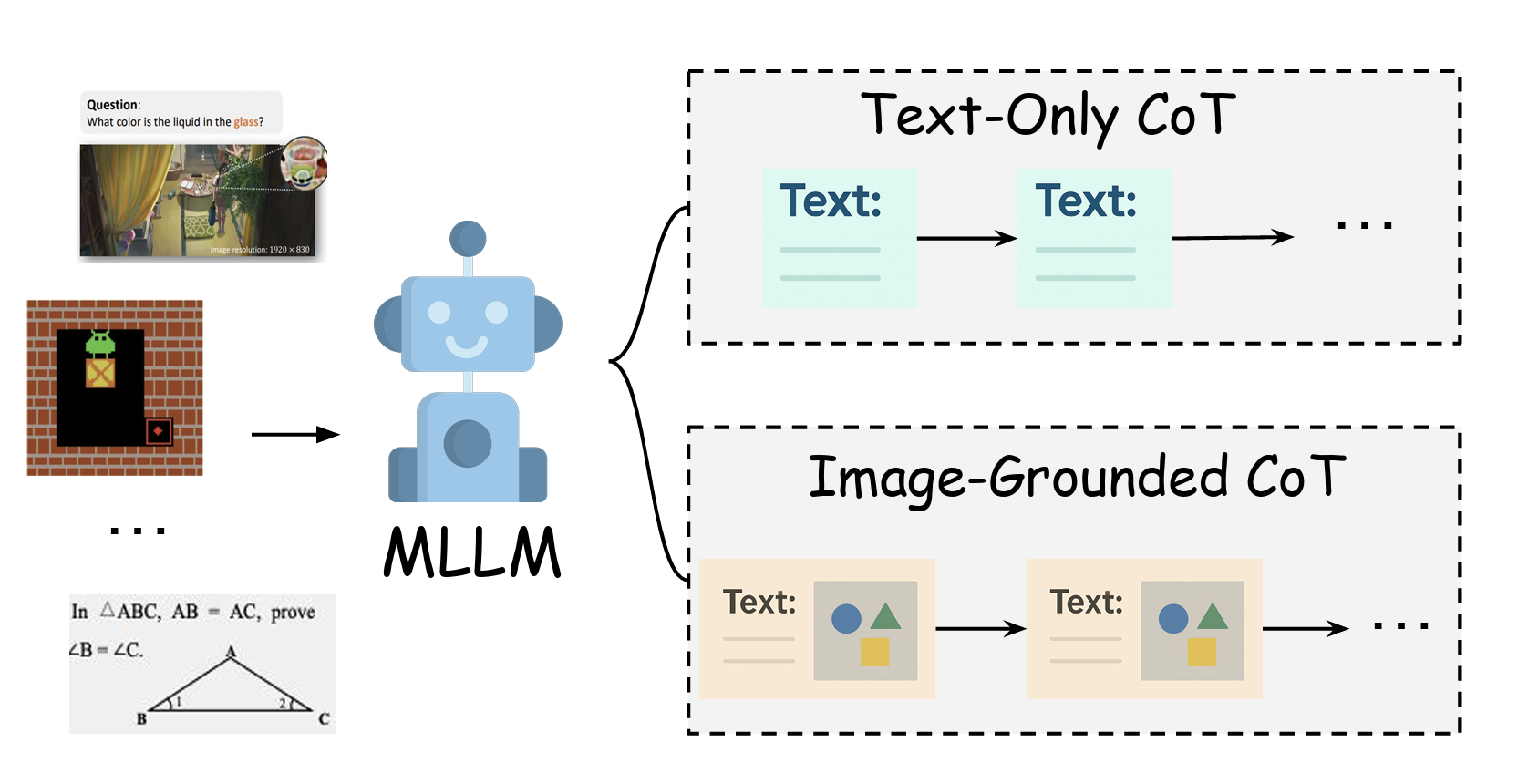
Image-Grounded Chain-of-Thought Reasoning teaser image
Revealing the Seen, Imagining the Beyond: A Survey of Image-Grounded Chain-of-Thought Reasoning in Multimodal LLMs
Qihua Dong, Yitian Zhang, Huimin Zeng, Yizhou Wang, Jianglin Lu, Kuo Yang, Yun Fu
ACL 2026 · Main Conference
A comprehensive survey on Image-Grounded Chain-of-Thought (IG-CoT) reasoning in multimodal LLMs, covering prompting, supervised fine-tuning, and reinforcement learning techniques for detail-oriented and imagined-world reasoning.
Abstract

Multimodal large language models (MLLMs) are making rapid strides in complex visual reasoning. This survey synthesizes the emerging paradigm of Image-Grounded Chain-of-Thought (IG-CoT), where models ground intermediate inferences by interleaving textual rationales with visual state updates. We formalize IG-CoT, present a method-centric taxonomy covering prompting, supervised fine-tuning, and reinforcement learning, and map these techniques to representative benchmarks. Our analysis identifies two domains where IG-CoT offers significant advantages: detail-oriented reasoning requiring meticulous perception, and imagined-world reasoning for simulating unseen states in games, geometry, and planning. We discuss the practical trade-offs of current methods regarding controllability, data, and compute. We conclude by highlighting key challenges—efficiency, data quality, and generative capabilities—and outlining promising future directions, including lightweight architectures, richer intermediate supervision, and method-aware evaluations that better assess faithfulness and long-horizon reasoning.

Decision-oriented uncertainty quantification framework for Earth system forecasting and risk control
Decision-Oriented Uncertainty Quantification for Risk Control in Earth System Spatiotemporal Foundation Models
Ji Lu, Huiran Duan, Bo Zhao, Xianglong Wang, Yiru Fang, Kuo Yang, Xiaoqin Feng, Jianping Gou
Accepted at ADMA 2026 · arXiv:2609.14821
Connects predictive uncertainty to action-dependent risks and calibrates downstream decision losses for Earth system forecasting.
Summary

This work studies how uncertainty in Earth system forecasts can support operational decisions. A decision risk adapter converts forecast samples, context, and utility functions into risks for candidate actions. Utility-aware calibration targets the reliability of decision losses, supporting choices such as warnings, dispatch, inspection, and resource allocation. The evaluation reports lower decision regret and missed-event rates than the strongest baseline. The arXiv record reports acceptance at ADMA 2026.

AMRD adaptive multi-teacher relational distillation framework for speech emotion recognition
AMRD: Adaptive Multi-Teacher Relational Distillation for Lightweight Speech Emotion Recognition
Yuqi Li, Yi-Cheng Lin, Xianglong Wang, Kuo Yang, Xiaoqin Feng, Yixuan Wang, Huiran Duan, Yingli Tian
arXiv preprint · July 2026
Adaptive teacher weighting and relational distillation compress speech emotion recognition models for efficient on-device inference.
Summary

AMRD transfers knowledge from multiple speech teachers into a lightweight student. It estimates teacher reliability for each batch with a one-class SVM, then combines weighted predictions with a loss that preserves relationships among samples. Evaluations on IEMOCAP and CREMA-D across four student architectures show complementary benefits from adaptive weighting and relational transfer. Both components act during training, leaving inference cost unchanged.

2025 #

Indra cross-modal retrieval results compared with original features, CCA, linear projection, and CLIP
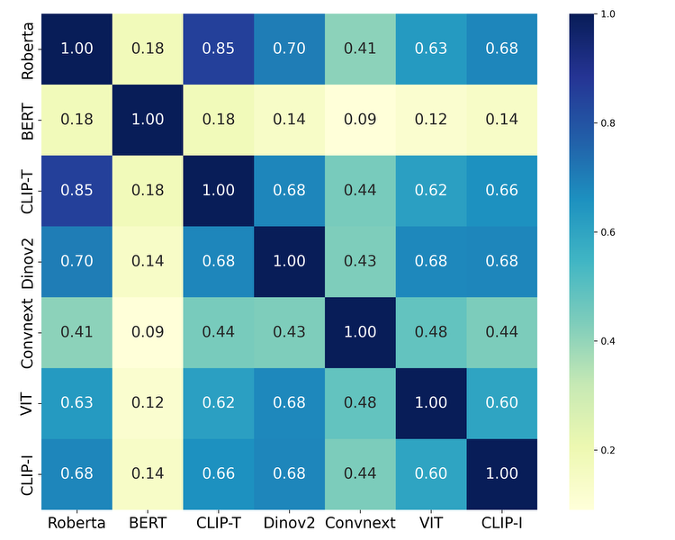
The Indra Representation Hypothesis for Multimodal Alignment
Jianglin Lu, Hailing Wang, Kuo Yang, Yitian Zhang, Simon Jenni, Yun Fu
NeurIPS 2025
The Indra representation provides a training-free framework for cross-model and cross-modal alignment, enhancing robustness across vision, language, and audio modalities.
Abstract

Recent studies have uncovered an interesting phenomenon: unimodal foundation models tend to learn convergent representations, regardless of differences in architecture, training objectives, or data modalities. However, these representations are essentially internal abstractions of samples that characterize samples independently, leading to limited expressiveness. In this paper, we propose The Indra Representation Hypothesis, inspired by the philosophical metaphor of Indra's Net. We argue that representations from unimodal foundation models are converging to implicitly reflect a shared relational structure underlying reality, akin to the relational ontology of Indra's Net. We formalize this hypothesis using the V-enriched Yoneda embedding from category theory, defining the Indra representation as a relational profile of each sample with respect to others. This formulation is shown to be unique, complete, and structure-preserving under a given cost function. We instantiate the Indra representation using angular distance and evaluate it in cross-model and cross-modal scenarios involving vision, language, and audio. Extensive experiments demonstrate that Indra representations consistently enhance robustness and alignment across architectures and modalities, providing a theoretically grounded and practical framework for training-free alignment of unimodal foundation models.

Representation Potentials of Foundation Models for Multimodal Alignment teaser image
Representation Potentials of Foundation Models for Multimodal Alignment: A Survey
Jianglin Lu, Hailing Wang, Yi Xu, Yizhou Wang, Kuo Yang, Yun Fu
EMNLP 2025
A comprehensive survey investigating the representation potentials of foundation models for multimodal alignment, synthesizing evidence from vision, language, speech, and neuroscience to understand cross-modal transfer capabilities.
Abstract

Foundation models learn highly transferable representations through large-scale pretraining on diverse data. An increasing body of research indicates that these representations exhibit a remarkable degree of similarity across architectures and modalities. In this survey, we investigate the representation potentials of foundation models, defined as the latent capacity of their learned representations to capture task-specific information within a single modality while also providing a transferable basis for alignment and unification across modalities. We begin by reviewing representative foundation models and the key metrics that make alignment measurable. We then synthesize empirical evidence of representation potentials from studies in vision, language, speech, multimodality, and neuroscience. The evidence suggests that foundation models often exhibit structural regularities and semantic consistencies in their representation spaces, positioning them as strong candidates for cross-modal transfer and alignment. We further analyze the key factors that foster representation potentials, discuss open questions, and highlight potential challenges.

Projects

Awesome Tiny Recursive Models

A curated research resource covering Tiny Recursive Models (TRM), Hierarchical Reasoning Models (HRM), and related approaches. Organizes papers, implementations, benchmarks, and results with evaluation protocol annotations to help readers compare findings in context.

Digital Human Project
Real-time Digital Human

Built a real-time digital agent by integrating TTS, STT, LLMs, and Speech-to-Image generation, synchronizing all components to deliver a seamless, interactive user experience.

Sleep Apnea Project
OurSleepKit

Created a cross-platform Flutter app utilizing Firebase as backend to support couples managing sleep apnea, promoting awareness and engagement while collecting valuable health data for research.

Human Body Measurement Project
Human Body Measurements

Developed a robust anthropometric body measurement pipeline using the SMPL framework to extract precise measurements from 3D human mesh data. Built a Python module to calculate key body dimensions from control points, scaled according to height and refined using correction factors for improved accuracy and repeatability.